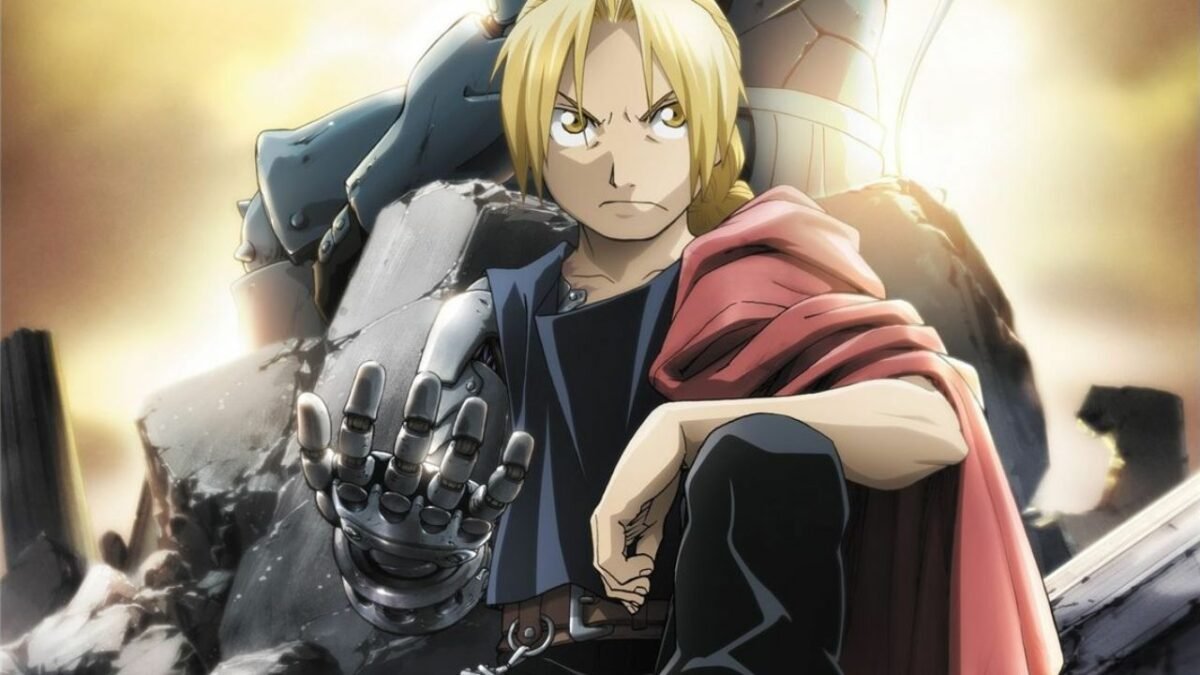
Alright, let's clear the air right from the start! If you landed here searching for "Sanji in Fullmetal Alchemist Brotherhood explained," you might be experiencing a bit of an anime crossover paradox. While we adore Sanji from One Piece for his culinary prowess and dashing kicks, he's a pirate, not an alchemist, and definitely doesn't make an appearance in Hiromu Arakawa's epic world of Amestris. Perhaps the Philosopher's Stone is more powerful than we thought, creating unexpected convergences!
But fear not, fellow enthusiast! We understand your real quest: to uncover every nuance of the widely celebrated conclusion of Fullmetal Alchemist: Brotherhood. This flagship Super Pillar hub is your ultimate guide, dissecting the true ending of the Elric brothers' journey, the sacrifices made, and the hopeful future they forged. Get ready to dive deep into the epic conclusion of Fullmetal Alchemist: Brotherhood and explore why it remains a benchmark for anime finales.
Understanding Brotherhood's Foundation: A Manga-Faithful Epic
Fullmetal Alchemist: Brotherhood isn't just another anime adaptation; it's a meticulously crafted experience that mirrors Hiromu Arakawa's original manga from start to finish. Debuting in 2009, this series was designed to be the definitive animated version, preserving every twist, turn, and emotional beat exactly as the author intended. This faithfulness meant no significant filler, no unexpected character arcs, just pure, unadulterated Fullmetal Alchemist. For those curious, you can pinpoint the subtle ways Brotherhood stayed true to its source material compared to other adaptations.
Father's Grand Design: The Villain Behind the Veil
At the heart of Fullmetal Alchemist: Brotherhood's conflict lies Father, an ancient, enigmatic being who began life as the "Dwarf in the Flask" from the long-lost kingdom of Xerxes. His ambition was boundless: to transcend humanity, absorb "God," and become the ultimate, all-knowing entity. To achieve this, he orchestrated millennia of human history, manipulating nations and creating the seven Homunculi from aspects of his own being. To truly learn more about Father's origins and his grand, terrifying plan, you need to understand the vast scope of his malevolent intellect.
These Homunculi, born from Father's core and given human-like forms, served as his loyal agents, each embodying a deadly sin. Their origins are intrinsically linked to Father's own essence, a stark contrast to the Homunculi seen in the 2003 anime, who were born from failed human transmutations. If you're keen to explore the stark differences in Homunculi origins and roles between the two series, you'll find a fascinating comparison of narratives.
The Ultimate Showdown: Alchemy, Sacrifices, and a God's Defeat
The climax of Fullmetal Alchemist: Brotherhood is nothing short of breathtaking. After years of chasing leads and battling shadowy forces, the Elric brothers and their growing circle of allies uncover Father's horrific plot: to sacrifice an entire nation's population using a massive transmutation circle to achieve his godhood. What followed was an epic, all-out war between humanity and Father's Homunculi.
In a desperate turn of events, Father briefly achieves his "perfect" form, absorbing "God" and becoming an omnipotent being. It's only through the incredible sacrifice of Van Hohenheim, who uses his own Philosopher's Stone to restrain Father, that the tide begins to turn. This momentary reprieve allows an Alkahestry reversal plan to take effect, stripping Father of his ill-gotten power and rendering him mortal once more.
The battle escalates with Edward losing his automail arm, but in a moment of selfless courage, Alphonse sacrifices his own soul – effectively reversing the transmutation that bound him to the armor – to restore Ed's original arm. It's a poignant reversal of their childhood tragedy. This incredible act sets the stage for the brothers' final confrontation with Father. For more on this pivotal moment, you can delve into Alphonse Elric's much-anticipated return and his exciting future endeavors. With his human arm restored, Ed delivers a final, powerful punch, literally tearing through Father's chest and sending him back to the Gate where "Truth" delivers its ultimate judgment.
The True Price of Alchemy: Edward's Unforgettable Trade
After defeating Father, the Elric brothers face one final, profound challenge. Al's soul has returned, but his body remains lost behind the Gate. Edward, having witnessed the immense power and terrible cost of alchemy throughout his journey, makes a monumental decision. Standing before the Gate of Truth, the gatekeeper of all alchemical knowledge, Ed performs human transmutation on himself. His price? His ability to use alchemy, forever. In exchange, he brings Alphonse back, whole and healthy, in his original body. To truly understand Edward Elric's ultimate sacrifice and his journey through the Gate of Truth, you must grasp the profound humility and acceptance he finds at this moment.
"Truth" itself, the god-like entity that governs alchemy and appears to all who attempt human transmutation, is defined by humility and the understanding of human limitations. Ed's final trade isn't just a sacrifice of power; it's an embrace of humanity, a realization that some things are more valuable than alchemy.
Forging a Future: The Heartwarming Resolution of Brotherhood
With the threat of Father vanquished and the brothers reunited, Fullmetal Alchemist: Brotherhood delivers one of the most satisfying and hopeful conclusions in anime history. Two years later, we see the fruits of their arduous journey:
- Rebuilding and Redemption: Colonel Mustang, despite his temporary blindness, is offered a Philosopher's Stone to help him rebuild Ishval, accepting the help of Scar, who dedicates himself to the cause.
- A New Journey: Alphonse, eager to broaden his horizons and help others, embarks on a journey to Xing with Jerso and Zampano to learn alkahestry, the sister science to alchemy.
- Love and Family: Edward, no longer able to use alchemy, settles down in the west. He proposes to Winry Rockbell in a wonderfully awkward and memorable scene. A flash-forward photograph shows them happily married with two children (a son and a daughter), alongside Al, May Chang, and their extended family.
- Peace and Legacy: Van Hohenheim is finally laid to rest beside Trisha, his love, achieving true peace. Ling Yao ascends to become the Emperor of Xing, bringing stability and progress to his nation. Mustang and Riza Hawkeye work tirelessly to rebuild the eastern regions of Amestris.
This conclusion reinforces the themes of growth, family, and the power of human connection over the pursuit of godlike power. To fully trace the captivating paths of fan-favorites like Colonel Mustang, Winry Rockbell, and others, each subplot serves as a testament to their resilience and newfound peace.
"Another Journey's End": The Manga's Enduring Message
The manga offers a beautiful epilogue chapter called "Another Journey's End," further cementing the series' themes of compassion and repurpose. After Al returns in his original body, a large box containing his old armor arrives. Instead of keeping it as a relic, Al requests Winry to melt it down. His intention? To have the metal reused to create automail for others in need, continuing his desire to help people, even without alchemy. This subtle addition beautifully demonstrates how to understand how the manga's conclusion shaped Brotherhood's narrative with such profound emotional depth.
A Tale of Two Endings: Brotherhood vs. The 2003 Anime
It's impossible to discuss the Brotherhood ending without acknowledging its predecessor. The original Fullmetal Alchemist anime from 2003, while starting faithfully, diverged significantly mid-series, creating its own distinct narrative and conclusion. If you're curious, you can explore the original anime's unique conclusion, which involved different Homunculi origins and a much darker, more bittersweet fate for the Elric brothers.
The 2003 anime ended with Edward trapped in "our world" (specifically, 1920s Germany) and Alphonse remaining in Amestris, separated by dimensions. Its cinematic follow-up, Fullmetal Alchemist the Movie: Conqueror of Shamballa, served as the true finale, bringing the brothers back together only for them to decide to stay in "our world" as World War I looms. For those wanting to unravel the threads of its cinematic follow-up, Conqueror of Shamballa, understanding its context is crucial.
This stark contrast highlights why Brotherhood's ending resonated so deeply. While the 2003 ending left many viewers with a sense of melancholic separation, Brotherhood delivered a hard-earned, joyous reunion within their own world, surrounded by loved ones, having truly paid their dues and learned from their journey. If you want to see a comprehensive comparison of the two anime endings, you'll find a detailed breakdown of how each version concludes its epic tale.
The Lasting Legacy of Fullmetal Alchemist: Brotherhood
Fullmetal Alchemist: Brotherhood's ending isn't just a conclusion; it's a powerful statement on growth, redemption, and the enduring strength of human bonds. It teaches us that true power isn't found in godhood or boundless knowledge, but in humility, sacrifice, and the love we share with others. The Elric brothers' journey, full of pain and discovery, ultimately concludes with hope, proving that even after facing the darkest truths, a brighter future can always be forged. Their story will continue to inspire generations, a true testament to Hiromu Arakawa's masterful storytelling.